17 Jun 2026Architecture

Architecture in the Age of BIM: Insights from XYZ’s Technical Director

image
Rather than existing as a background digital tool, Building Information Modeling (BIM) has become embedded in how contemporary architecture is developed and coordinated — influencing both design thinking and project delivery at every stage.
As XYZ Designers continues to expand its international presence, the establishment of a new office in Cairo marks a significant step in this development. The office will be led by its Technical Director, Ahmad Alaa Ahmad, who is overseeing its setup and integration within the company’s global workflow and technical direction.
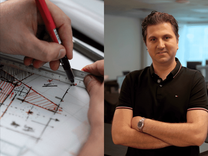
Within this context of growth and expansion, he reflects on how BIM is shaping architectural practice on a day-to-day level. With more than 17 years of experience across leading international consultancies, he brings a practical perspective on how digital workflows are reshaping both design processes and decision-making.
How would you describe the real impact BIM has had on the way we design architecture today?
The impact of BIM goes far beyond producing drawings more efficiently. It has changed the way architects think through design problems as they work. Instead of relying mainly on experience, decisions are now made with both intuition and the model working together. When those two align, teams can move forward with more confidence and speed.
Rather than replacing professional judgment, BIM strengthens it by giving access to accurate, real-time information throughout the process. This allows architects and engineers to make better-informed choices at every stage of a project. Some of the most meaningful design decisions now happen where experience meets digital analysis — where what you know from practice is tested and refined through the model.
How has your architectural workflow changed the most since BIM became standard?
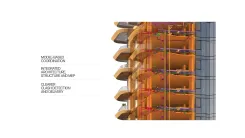
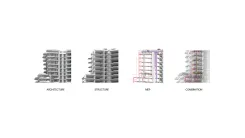
One of the biggest changes has been how much smoother coordination has become between teams. The whole process feels less fragmented and a lot more connected than before. Before BIM, a lot of time was simply spent fixing version issues, trying to align different disciplines, and spotting inconsistencies across drawings. Now the model works as a shared, live source of truth that everyone can rely on.
Instead of constantly chasing updates and resolving coordination issues, teams can focus much more on the actual design intent. That means less time spent managing information, and more time improving the quality and clarity of the design.
image
Where do you personally see BIM bringing the most value: design quality, coordination, or project delivery?
While BIM supports all three areas, coordination is still its strongest value. When coordination works properly, everything else follows more naturally — from design quality to final delivery. It allows architects and engineers to identify issues much earlier, avoid unnecessary redesigns, and stay aligned with the project goals throughout the process. Once that foundation is in place, better design outcomes and smoother delivery tend to come as a result rather than something you have to constantly push for.
Ultimately, BIM is not just about making things faster. It’s about making better buildings — and that’s something that often gets overlooked.
Has BIM changed the way design decisions are made during early concept stages? If so, how?
In the past, conceptual design was highly intuitive and exploratory, with limited clarity about what would come next. Today, there is much greater visibility from the start. Architects still sketch, explore ideas, and take creative risks, but with a clearer sense of direction.
Key factors such as structure, environmental performance, solar exposure, spatial quality, and building operation can now be considered much earlier. Instead of appearing later, they are part of the conversation from day one. Designers can already anticipate how the building behaves, how much area is likely, and how sunlight will affect it at different times of day. This adds confidence rather than restriction.
With modern BIM tools, challenges can be identified early, ideas tested, and risks assessed before they become problems. Decision-making becomes more grounded while still leaving room for creativity. In that sense, BIM has changed how design begins.
image
How has BIM changed collaboration inside the studio and with external consultants?
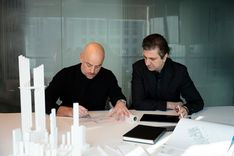
One of the biggest changes BIM has brought is the way it connects people across different disciplines. Inside the studio, it has almost killed the ego of the drawing. Nobody really works in isolation anymore — nobody owns a sheet anymore; everyone owns the model together. That shift changes how people collaborate and contribute to the project.
In a shared, live environment, architects, engineers, and consultants can immediately see what’s happening in the project, including clashes or changes. Issues don’t sit waiting for the next coordination cycle — they can be addressed right away.
Instead of long back-and-forth exchanges, everyone works on the same information at the same time and solves problems together as they come up.
With external consultants, things are more complex, which is why we’re setting BIM standards from day one in the new Cairo office — not waiting for people to catch up, but establishing a shared way of working from the start.
BIM creates a common language, and that’s what makes communication clearer and decisions faster.
From your perspective, what aspects of BIM still need further development to better support architectural practice?
Even with all its advantages, BIM still struggles a bit with the early, more intuitive stage of design — when ideas are still loose and being explored freely.
The tools keep improving, but they still don’t fully match the ease and spontaneity of sketching. At times, digital modeling can feel more structured and less fluid than the way architects naturally develop concepts at the beginning.
That said, the gap is clearly shrinking. Tools are becoming more flexible and intuitive, and we’re getting closer to a point where creative freedom and digital precision can genuinely coexist.
As conceptual design, generative tools, and real-time analysis continue to merge, BIM is becoming not only more powerful, but also more natural to use during the creative stage.
How do you balance design freedom with BIM requirements when working on complex or experimental projects?
I don’t really see BIM as something that limits creativity. I genuinely don’t see a conflict — and I think architects who do are fighting the wrong battle.
The constraint was never BIM. The constraint is always budget, structure, physics. BIM just makes those constraints visible earlier in the process, so you spend your creative energy on things that actually matter, not on ideas that were never possible in the first place.
Once those constraints are clear from the start, it actually changes the way you work. Instead of spending energy on ideas that may not be buildable, you can focus more on solutions that are both creative and realistic. In that sense, it’s less about restriction and more about direction — it helps you put creativity where it has the most impact.
image
Looking at our projects, what best demonstrates the real value of BIM in architectural practice?
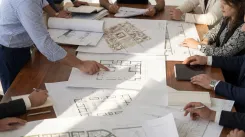
For me, the most convincing demonstration of BIM’s value happens during client meetings and project reviews. In the past, when a client raised a question during a meeting, we often needed time to investigate and come back with an answer later. Today, the model gives immediate access to project information, so we can review issues, test solutions, and make decisions in real time.We can open the model together, look at the situation on the spot, and often resolve the issue immediately. That kind of responsiveness builds trust between the project team and stakeholders, and it also improves the overall decision-making process. When you have the model in front of you, there’s a different level of confidence. Clients can see what’s happening, understand the issue clearly, and take part in finding the solution.
image
In the end, BIM shows its real value in how projects are run day to day. It reduces delay, brings clarity into coordination, and makes decision-making more immediate and shared. Instead of waiting for answers, teams can often respond directly from the model, in real time. That shift — from reacting later to solving things as they come up — is where its impact becomes most visible.

other news