How Technology and AI Are Transforming Architectural Design
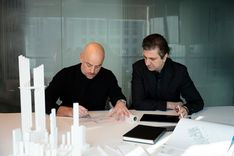
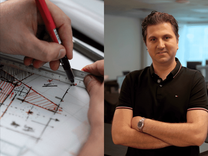
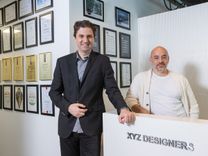
In today’s architectural practice, digital tools and artificial intelligence (AI) are reshaping the way designers conceive, iterate, and execute projects. Leen Husrieh is an interior designer from the concept department, specializing in spatial narratives and design storytelling. Sherif Khaled Abdelhkaliq Abdelhamid is an architect who works from pre-design through all development stages. Khaled Alshaama, co-founder of the studio and an architect, is deeply involved in shaping the firm’s design philosophy. Together, they share how technology enhances both the creative process and the final product.
How have technologies changed the way you work?
Leen: Technology, AI included, doesn’t replace a designer’s creativity — it amplifies it. It allows a focus on the creative aspects while automating repetitive tasks. For example, something that would take hours or even days to produce can now be done in a fraction of the time. It’s like having an assistant that can help brainstorm, test ideas, and iterate quickly without interrupting other designers who are working on their own tasks.Sherif: Advanced technologies: parametric modeling, computational design, 3D printing, and AI — have fundamentally changed how iteration works. The design process is no longer strictly linear. Hundreds of options can now be tested quickly, not just one or two, and decisions can be based on real data — views, solar analysis, floor area, and more. These tools have transformed both the process and the product, enabling more complex forms while keeping them feasible to construct.Leen: AI especially helps cut down time spent in the early stages, particularly during conceptual brainstorming. Instead of spending three days to reach a concept that the client might want to adjust, it is possible to reach that point in three hours, leaving more time for development and refinement.
Can you give an example of your project where digital tools completely changed the outcome?
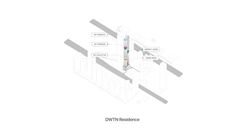
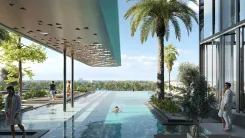
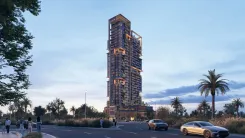
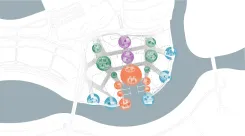
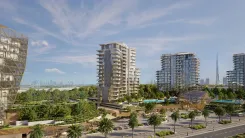
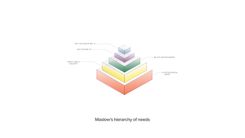
Leen: One example is the DWNT Residence project, where we developed the spatial narrative of the project. We took Maslow’s hierarchy of needs and transformed it into a “hierarchy of luxury” for the project — meaning that different levels of comfort and services in the residential environment corresponded to different “needs” of the future residents. To refine this idea, I used a large language AI model as an assistant and critic: I would propose concepts, and the AI helped clarify them, suggested new ideas, and helped quickly filter out weaker options. This process significantly reduced the time needed, and the final narrative was developed well enough that the client’s marketing team could use it directly for presentations and sales. Sherif: On the architectural side, projects like Marjan Island demonstrate how computational tools guide form development. Wind analysis influenced the angle of waterfront buildings to protect outdoor spaces from strong gusts, while views analysis determined which form captured the most desirable sightlines for key vistas. Without these digital simulations, the outcomes would have been far less precise and data-driven.
What professional tools do you use in architecture, beyond general AI like ChatGPT?
Leen: For interiors, AI is still evolving because our work is very detail-driven. It’s a little more complicated to apply than in architecture, but we’re exploring ways to use it more effectively. Sherif: For architecture, we use a combination of publicly available AI models like those from Google, Microsoft, and OpenAI — and specialized tools for design and video generation, such as Kling or Veo. For computational design, we rely on Rhino and Grasshopper for rapid iterations and testing project feasibility, including built-up area and other constraints. Revit and Dynamo also play important roles in form development and performance-based analysis. We run simulations for climate, solar radiation, daylight availability, wind, and views. All of this data informs the design, shaping how forms develop and how spaces are used. For instance, at Marjan Island, wind analysis influenced building angles to protect outdoor areas, while views analysis helped select forms that maximized key sightlines. The AI-assisted workflow is iterative. It starts with mental ideation, then moves to brainstorming with a language model like ChatterBot or Gemini. Next, images are generated using AI tools such as Nano Banana Pro, and the prompts are refined based on these visuals. This loop — thinking, AI feedback, and sketching or modeling — enhances both conceptual design and execution, similar to the traditional mind-and-hand process, but faster and guided by data.
Your studio is creating its own AI software. Can you tell us about it?
Khaled: The AI software, which we call Co-Pilot, is one of our most ambitious initiatives. It is designed to carry the studio’s DNA: our design principles, lessons learned, and accumulated experience — so that any architect or designer using it in the future will automatically inherit our approach. Phase one focuses on the pre-concept stage, while later phases will cover concept, schematic, and beyond. This ensures that every designer aligns with our creative principles while still being able to explore their own ideas. Personally, I am very interested in AI and periodically participate as a speaker in discussion panels on this topic, representing the architecture industry. Sherif: Beyond design, Co-Pilot acts as a data pipeline across the firm, integrating project management, administration, and knowledge sharing. It allows new team members to navigate the studio’s workflow efficiently without constant supervision, moving from step A to step B while still leaving space for human creativity. In the long term, proprietary machine learning models will generate design solutions from internal data, ensuring alignment with the studio’s style and vision.
How do simulation and data help you make decisions in urban projects and sustainable design?
Sherif: Data plays a central role in shaping both urban form and sustainability. In Marjan Island Zone 3, wind simulations informed building orientations and the layout of outdoor spaces, ensuring comfort by minimizing exposure to strong winds. We also use solar and daylight analyses to optimize natural light within interior spaces while reducing heat gain, which decreases reliance on artificial lighting and mechanical cooling. Beyond comfort, these simulations help us make data-driven decisions about building forms, orientations, and the overall urban layout, ensuring that design choices are efficient, sustainable, and aligned with environmental goals. Leen: For interior projects, AI tools for sustainability are still evolving. However, digital simulations already guide decisions at the architectural level, helping us minimize energy use, optimize lighting, and control thermal comfort. These tools enable informed, environmentally responsible design choices without compromising aesthetics or functionality, making the design process both sustainable and data-driven.
With all these tools, which parts of your work still rely entirely on human creativity?
Leen: AI is a great assistant, but it can’t replace a designer’s intuition, judgment, or personal touch. Creativity is still something only humans can bring. Designers are pilots — they review the results, refine ideas, and make important decisions. Even with AI, you need to know your craft to understand what works, what needs tweaking, and what fits the project’s context. Sherif: AI helps at every stage — it can generate hundreds of ideas, give feedback, and even visualize concepts — but the final vision, the storytelling, and critical thinking are always human. Designers choose which AI suggestions to follow, adjust them for the client’s needs, and make sure they fit the project. Tools like Co-Pilot speed things up and open new possibilities, but they don’t replace the designer’s creativity or style. Today, technology sits quietly alongside the studio’s design process. It helps ideas move faster, reveals possibilities that might otherwise stay hidden, and gives the team more time to focus on atmosphere, meaning, and intent. The heart of the work, however, remains unchanged — shaped by intuition, experience, and a shared design culture that guides each project from its earliest sketch to its final form.