Architecture as Experience: Designing Spaces That Move People
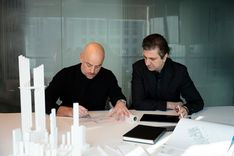
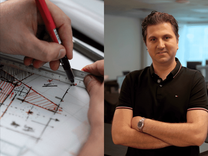
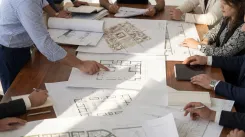
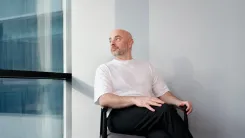
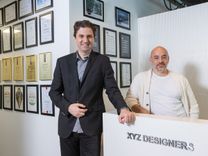
At XYZ Designers company, architecture is not conceived as a fixed object, but as an evolving experience — one that takes shape through movement, perception, and emotion. Rather than privileging form alone, the studio approaches desTelfah (Associate Senior Architect), Bruno Stringheta (Associate Senior Architect), and Krittaporn Siripoketo their surroundings. Rooted in a deeply human-centered ethos, their process begins with the lived realities of the user — their rhythms, sensitivities, and patterns of interaction. Through a deliberate interplay of light, materiality, scale, and spatial continuity, the XYZ team crafts environments that transcend utility, leaving a subtle yet enduring resonance. Whether expressed through nuanced transitions or expansive gestures, each project is imagined as a narrative — an immersive continuum that unfolds over time and embeds itself in memory.In this conversation, three members of the team — Khalid Telfah (Associate Senior Architect), Bruno Stringheta (Associate Senior Architect), and Krittaporn Siripoke (Landscape Design Architect) — reflect on how the studio shapes spaces that not only function, but deeply move those who inhabit them.
How does your studio define architecture as an experience rather than just a physical structure?
Khalid: At XYZ, we don’t see architecture as an object. We see it as a sequence of moments. A building isn’t just a final product — the real outcome is the feeling it creates. We design spaces that allow people to move through, reflect, and connect emotionally. From arrival to the smallest details, every element contributes to a journey. Our goal is to create impressions that go beyond form — something rooted in experience.Bruno: I completely agree. We focus a lot on the journey through a building — how you arrive, where you pause, how you move, and where you meet others. These “moments” become the key spaces in our projects — places to gather or reflect. Often, what might traditionally be seen as leftover or secondary spaces become the core of the design. That’s where we emphasize the human aspect the most.
What design strategies do you use to shape how people feel and behave within a space?
Krittaporn: We use spatial sequencing, proportion, contrast, and the idea of compression and release to create tension and relaxation. From a landscape perspective, we also rely on natural systems — light, shadow, water, and movement to guide people gently through a space and encourage exploration. We position views and lighting to guide behavior and control movement through clear spatial flows. Simplicity is key — we try to remove unnecessary complexity so the experience becomes the focus.Bruno: Materiality also plays a big role. Small details — like rounded corners or textured surfaces — can change how people physically and emotionally engage with a space. These subtle interventions create a closer relationship between the user and the architecture.
How do you incorporate human-centered thinking into your design process from the very beginning?
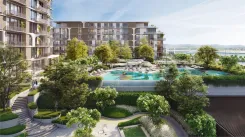
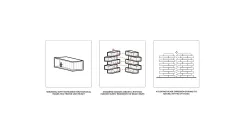
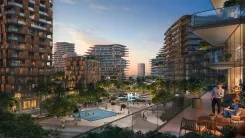
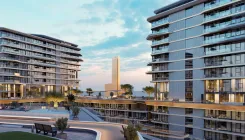
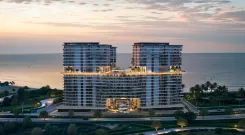
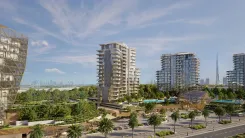
Khalid: We always begin with one question: How will this space be experienced? Before thinking about form, we define the user — who they are, what they feel upon arrival, and how their emotions unfold in space. Architecture becomes a response to that experience, not just a concept.Krittaporn: We also analyze user routines — how people move, behave, and interact. Observation and research help us create designs that feel intuitive and human-centered. Bruno: In Quattro del Mar, for example, instead of designing four separate buildings, we created a unified urban facade. This allowed us to design interconnected spaces between the buildings — landscaped areas, shared views, and continuous pathways. The goal was to create a cohesive urban experience rather than isolated structures. Mission accomplished: this solution created a sense of unity. We wanted people to feel part of a larger whole — an urban fabric — rather than a single building.
In what ways do elements like light, material, scale, and sound influence the emotional impact of your projects?
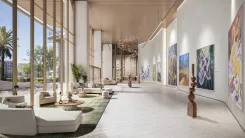
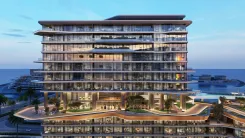
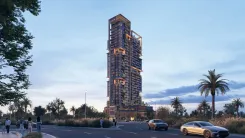
Khalid: In our project Nura, we designed a 10-meter-high gallery space as the main entrance. It’s unexpected — almost overwhelming in scale — and filled with natural light. Residents pass through this space daily, turning a routine moment into something meaningful. It functions as an art gallery, event space, and social hub — all within one experience. This space becomes the heart of the project — it combines light, scale, and movement into a single defining moment.Bruno: In projects like Costa Mare, we use contrast such as carving a dark void into a building mass to create emotional impact. Everything matters: light creates mood and rhythm, materials express authenticity, scale influences perception and sound contributes to comfort and calm.
How do you anticipate and design for the different ways people might interact with a space over time?
Bruno: It’s challenging, but materiality plays a big role. We try to use materials that age well like stone, steel, or wood, because they evolve over time and add character. Also, we avoid trends and focus on timelessness. We aim for fewer, better elements and build flexibility into a clear design framework.
What role does storytelling play in your architecture, and how is it translated into physical space?
Krittaporn: Storytelling is the foundation of every project. Each design begins with a narrative — like a blank canvas. Every member of the team translates that story into massing, circulation, spatial hierarchy, and facade. The story isn’t told explicitly — it’s experienced. It also guides decisions about materials and spatial composition, helping make each project unique.
How do cultural and social contexts influence the experiences you aim to create in your designs?
Bruno: Often, we work in places where the context doesn’t fully exist yet — it’s just a masterplan. So we rely on physical elements like topography, water, and climate. For us, context is a driver. We consider local lifestyles and cultural patterns, but reinterpret them through a modern, minimalist lens. In regions like the UAE, climate is crucial. It influences everything — from layout to materials to community design.
How do you evaluate whether a space successfully “moves” people once it is built?
Khalid: Success is when people feel something without it being explained.Bruno: We observe behavior — where people stop, gather, take photos, or spend time. These natural reactions tell us whether space works.Krittaporn: It’s also about whether the space continues to support daily routines and invites people to return.
Looking ahead, how do you see experiential architecture evolving, especially with new technologies and changing human needs?
Khalid: Architecture is becoming smarter, but also more human. Technology will improve efficiency and personalization, but the foundation will remain the same — emotion, storytelling, and clarity. Bruno: The future isn’t about adding complexity. It’s about creating deeper, more meaningful experiences.
In the end, architecture at XYZ is less about what is built and more about what is felt. It lives in the pause between spaces, in the shift of light across a surface, in the quiet moments of encounter and reflection. As cities grow denser and faster, their work offers a different rhythm — one that invites people to slow down, to notice, to experience. In these spaces, architecture becomes something intangible yet deeply present: not just a backdrop to life, but an active participant in it — shaping memory, emotion, and the way we move through the world.